




Rune Reader
How I decide to build a news letter reader with Arnav Gosain.
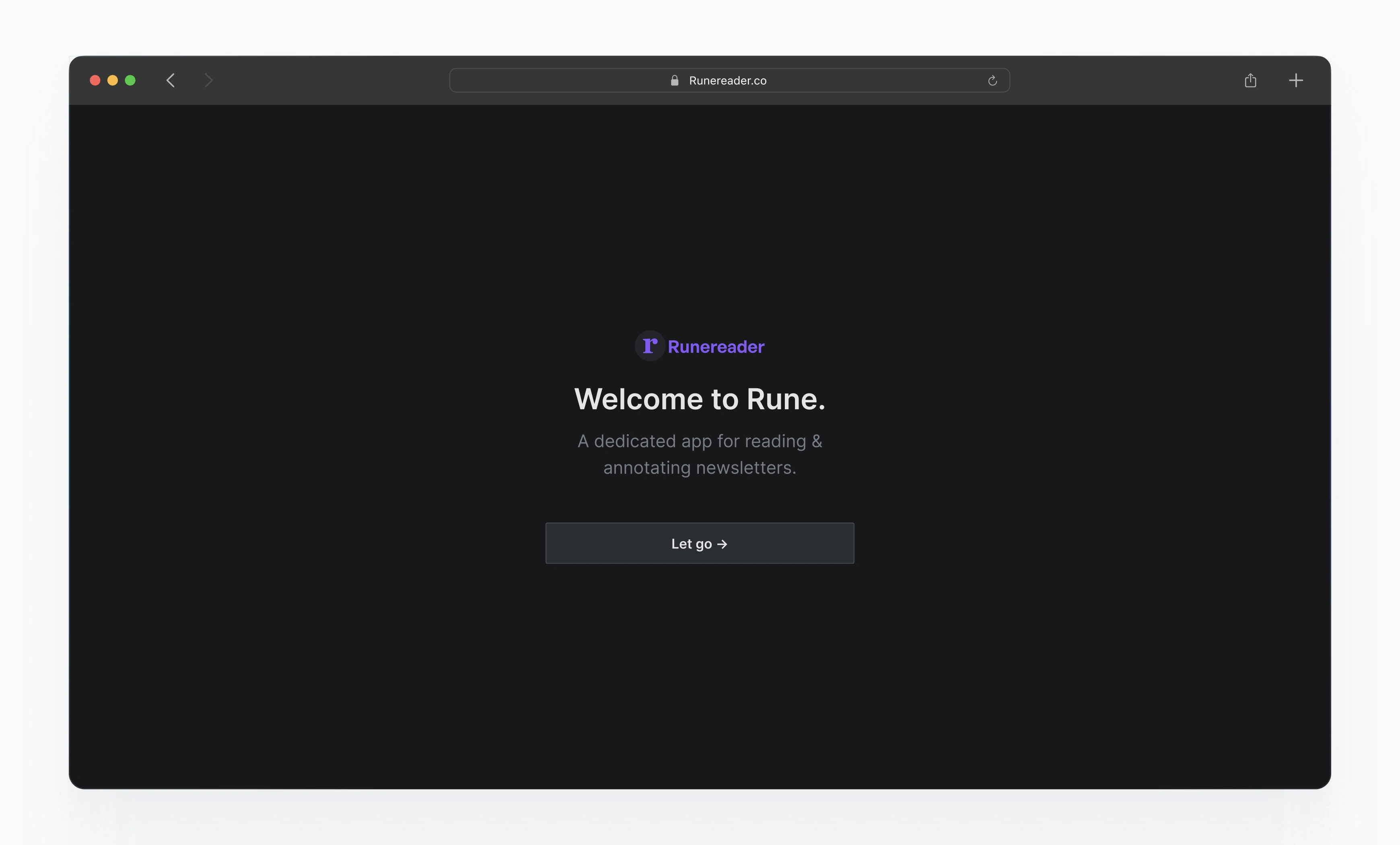
To me, Substack sparked a new era for newsletters. In much the same way WordPress made publishing blogs accessible to everyone, Substack transformed newsletters into a thriving medium for independent writers.
Reading newsletters became a daily ritual for me at some point, and I've advised a lot of my friends who could write to use Substack.
But the more time I spent reading newsletters, the more obvious it became that email was never really designed for consuming long-form content.
Where newsletters go to die
General-purpose email apps prioritise managing your inbox, not creating a comfortable reading experience. As a result, even great writing often feels buried in a tool built for productivity rather than reading.
After speaking to Arnav via discord in 2022, we decided to build a solution with no platform restriction like Slick Inbox or Matter.
Our process
We wanted to keep the project intentionally simple and we wanted to build fast. The goal was to build a focused reading experience with as little complexity as possible with a significantly better core experience .
To start, I created bare-bones wireframes and user flows, adapted the Tailwind text styles, and developed a custom colour system in Figma.
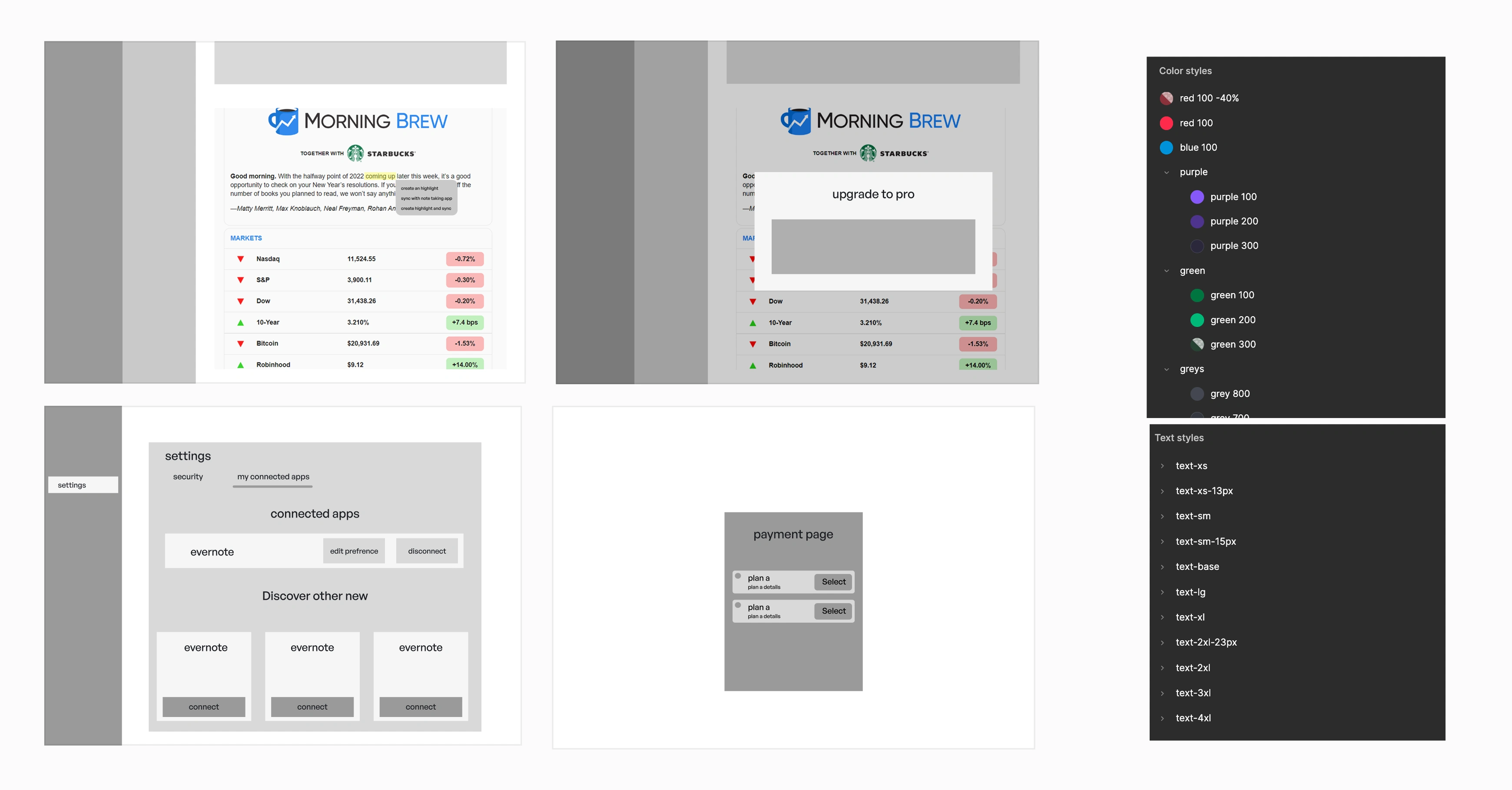
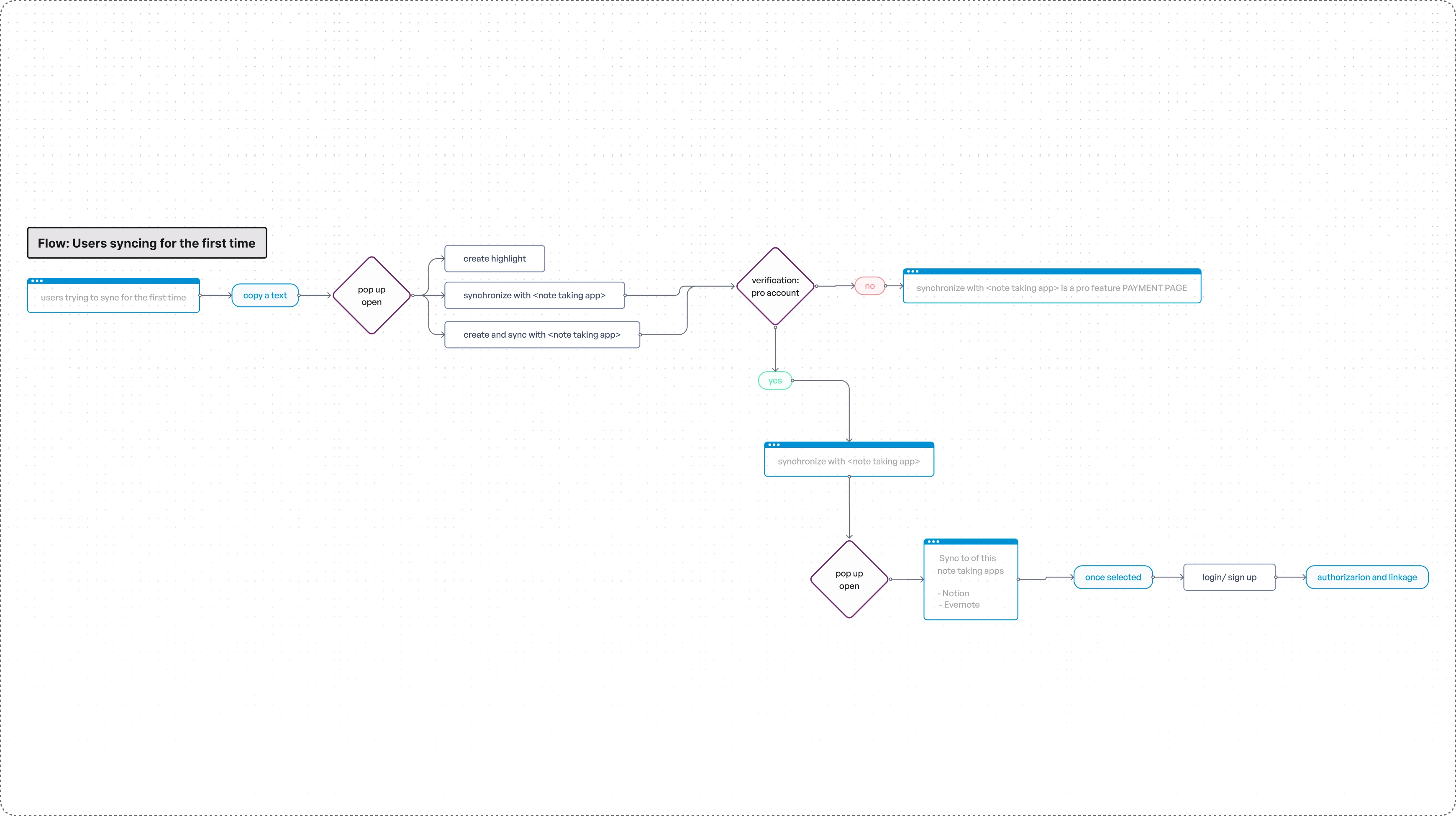
Our assumptions about how people would use Rune
First
Many users already have newsletters tied to their existing email address, so they need a way to keep receiving them without resubscribing.
Second
Some users would want a dedicated email address exclusively for newsletters going forward, keeping their personal inbox separate from their reading inbox.
Fortunately
A single decision solved both problems. Every Rune account is assigned a unique inbound email address in the format username@inbox.runereader.co.

The solution
Highlighting and syncing
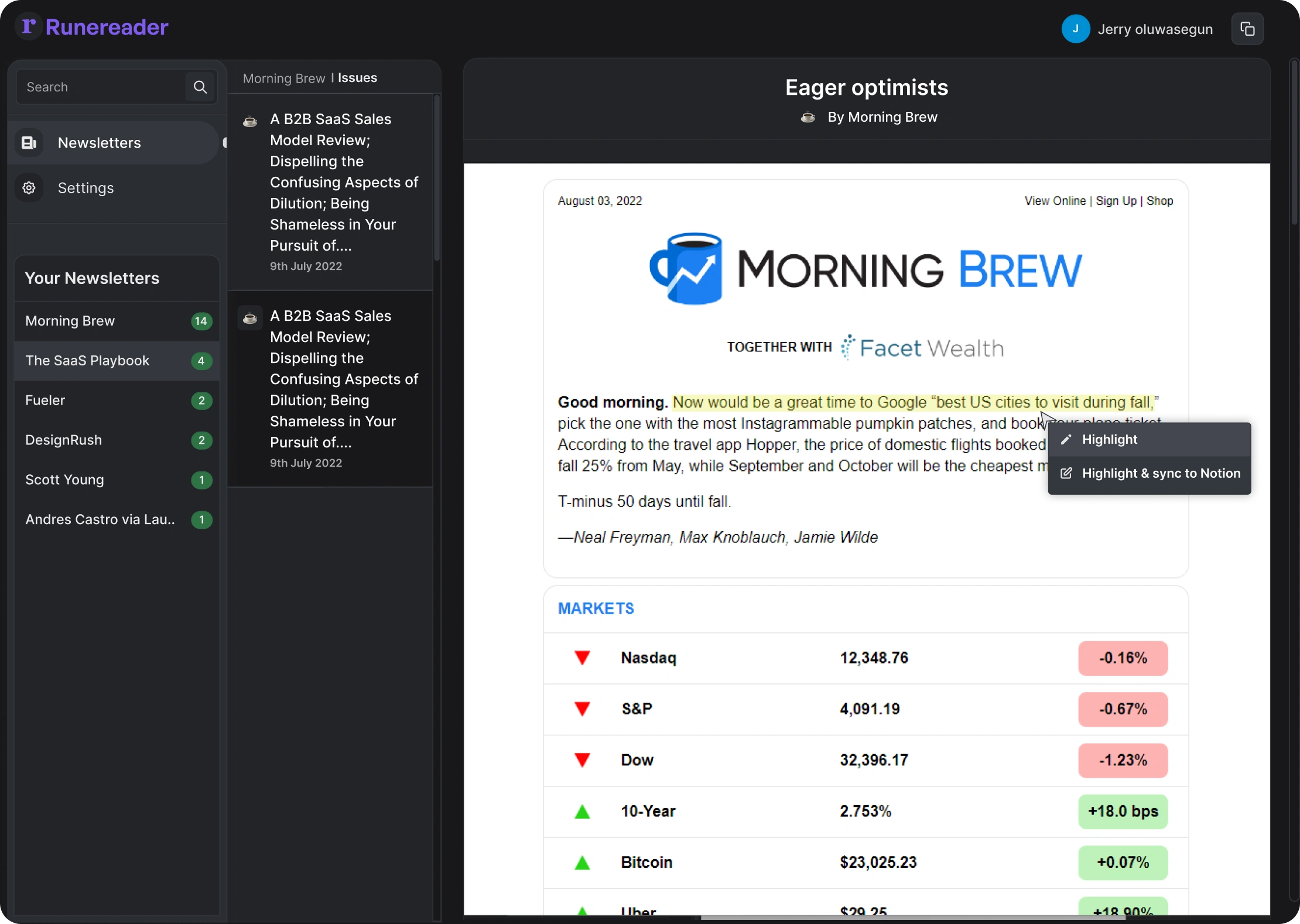
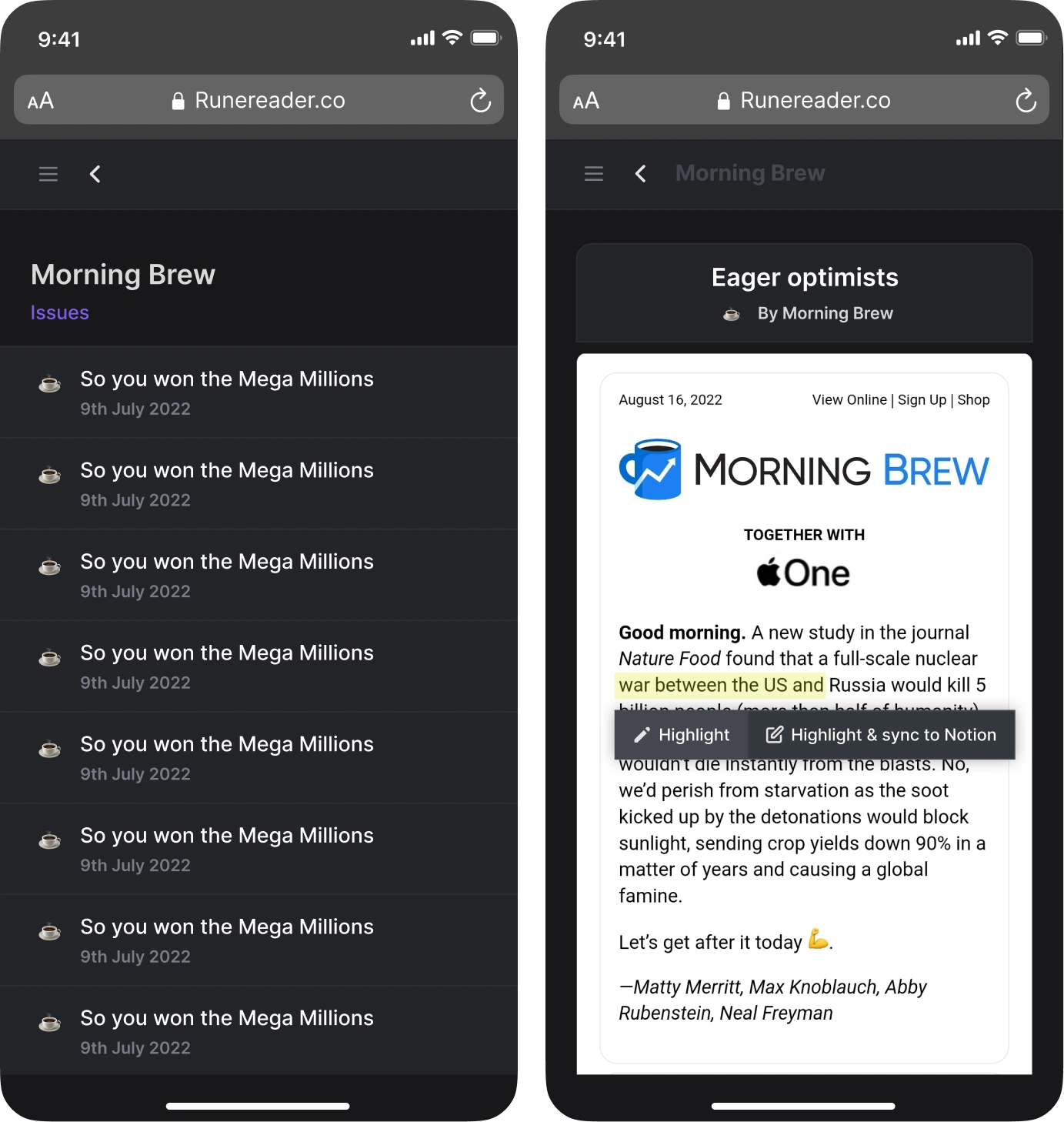
The reading experience stays close to what people already know: newsletters on one side, issues on the other, and a pane that renders each issue in its native layout.
And on selection users can Highlight, or Highlight & sync to Notion, pushed straight into a connected workspace.
Integrations
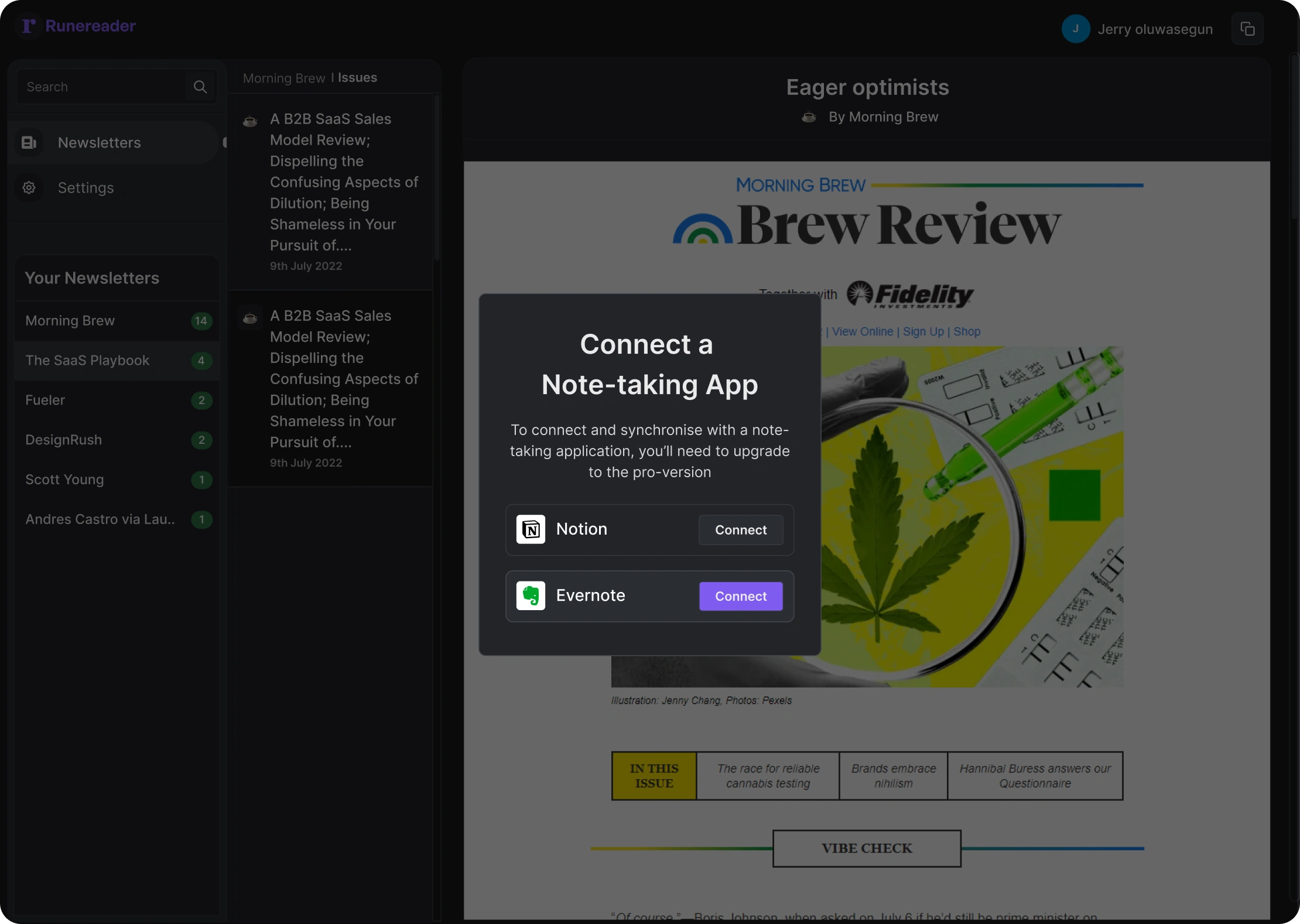
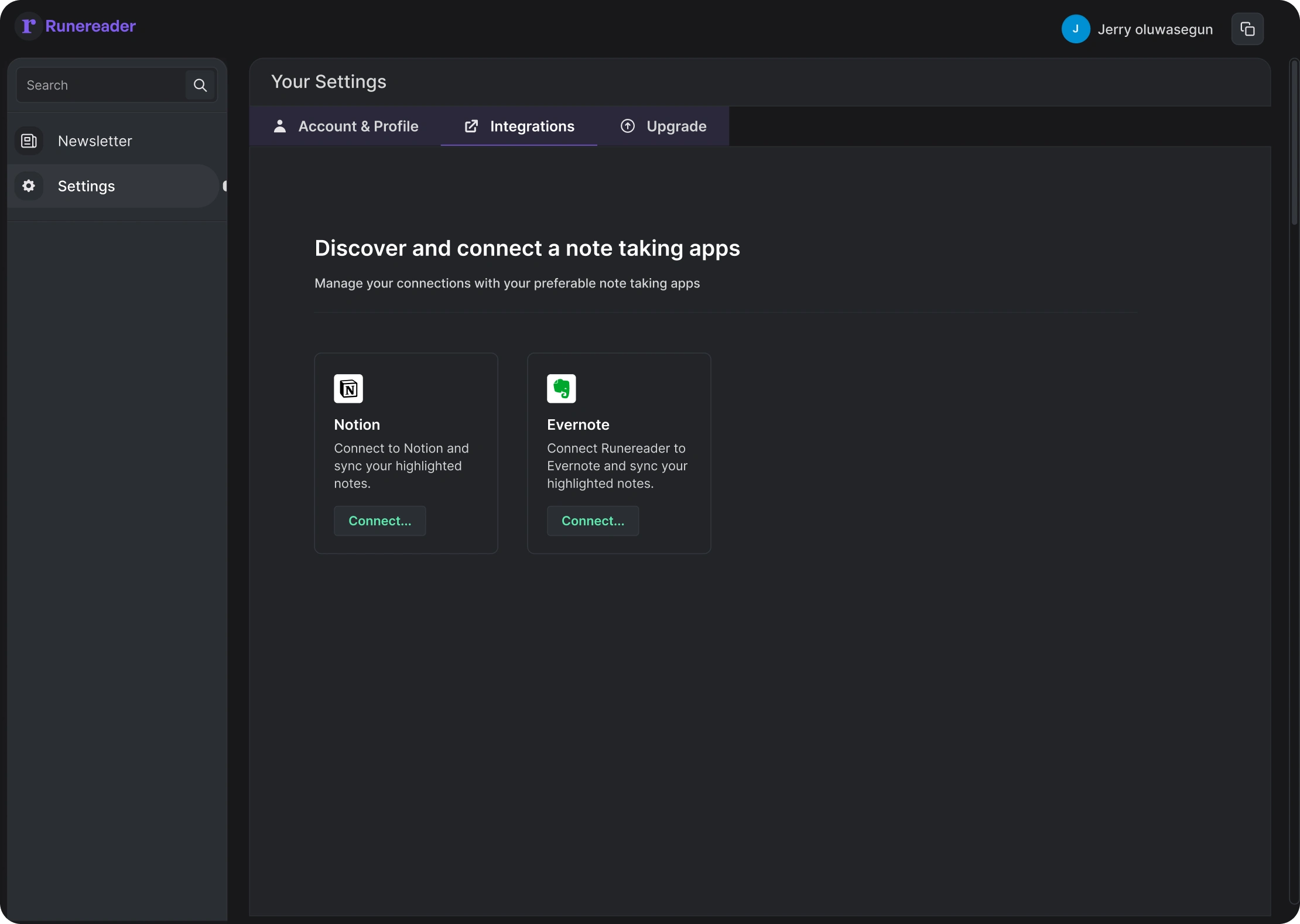
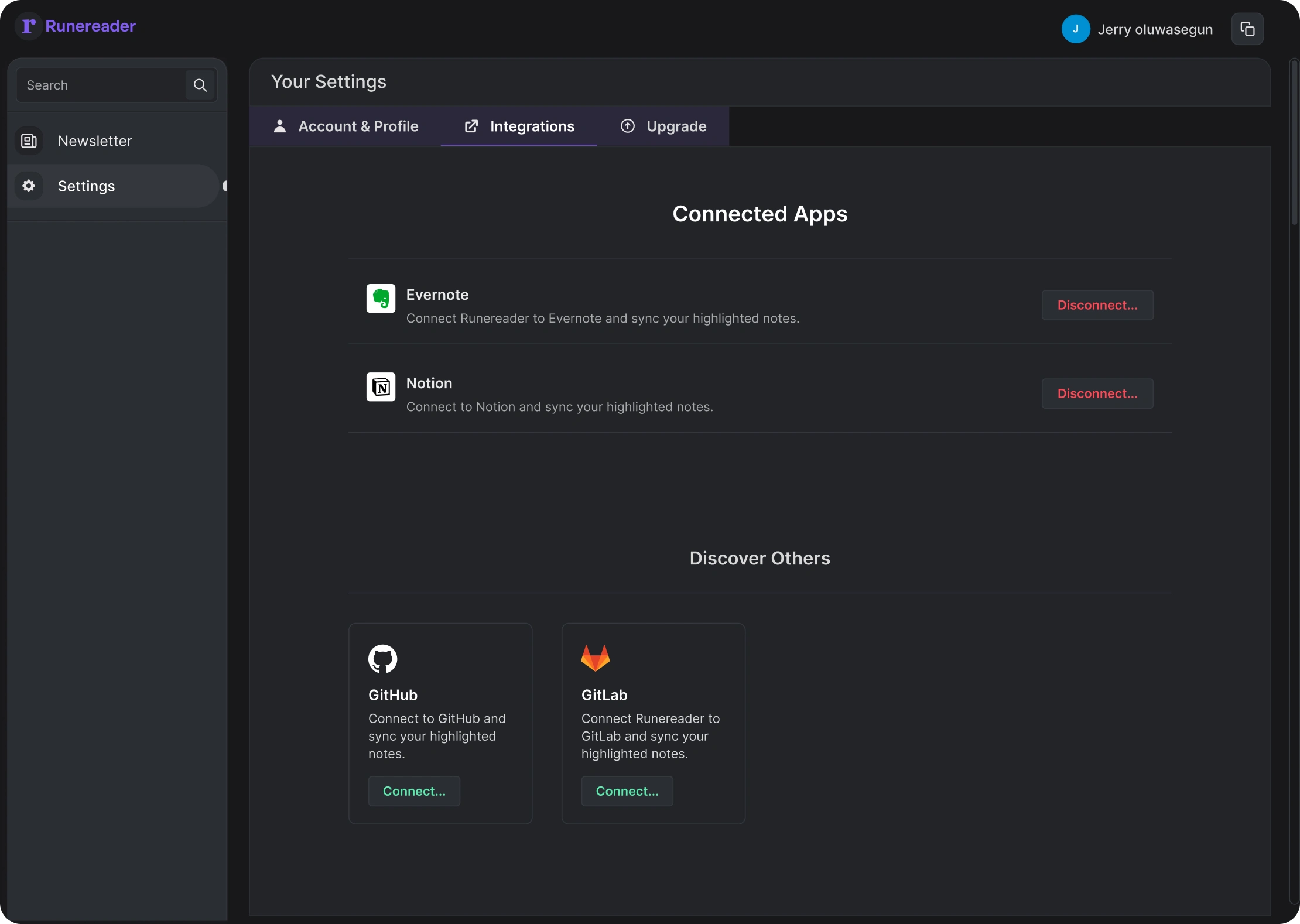
Users can connect their favourite note-taking apps and save their highlights directly to their preferred workspace.
At launch, we supported integrations with Notion and Evernote, with plans to expand to more apps over time. Although this feature was originally considered for a paid Pro plan, we decided to make it available to everyone.
Mobile Responsiveness
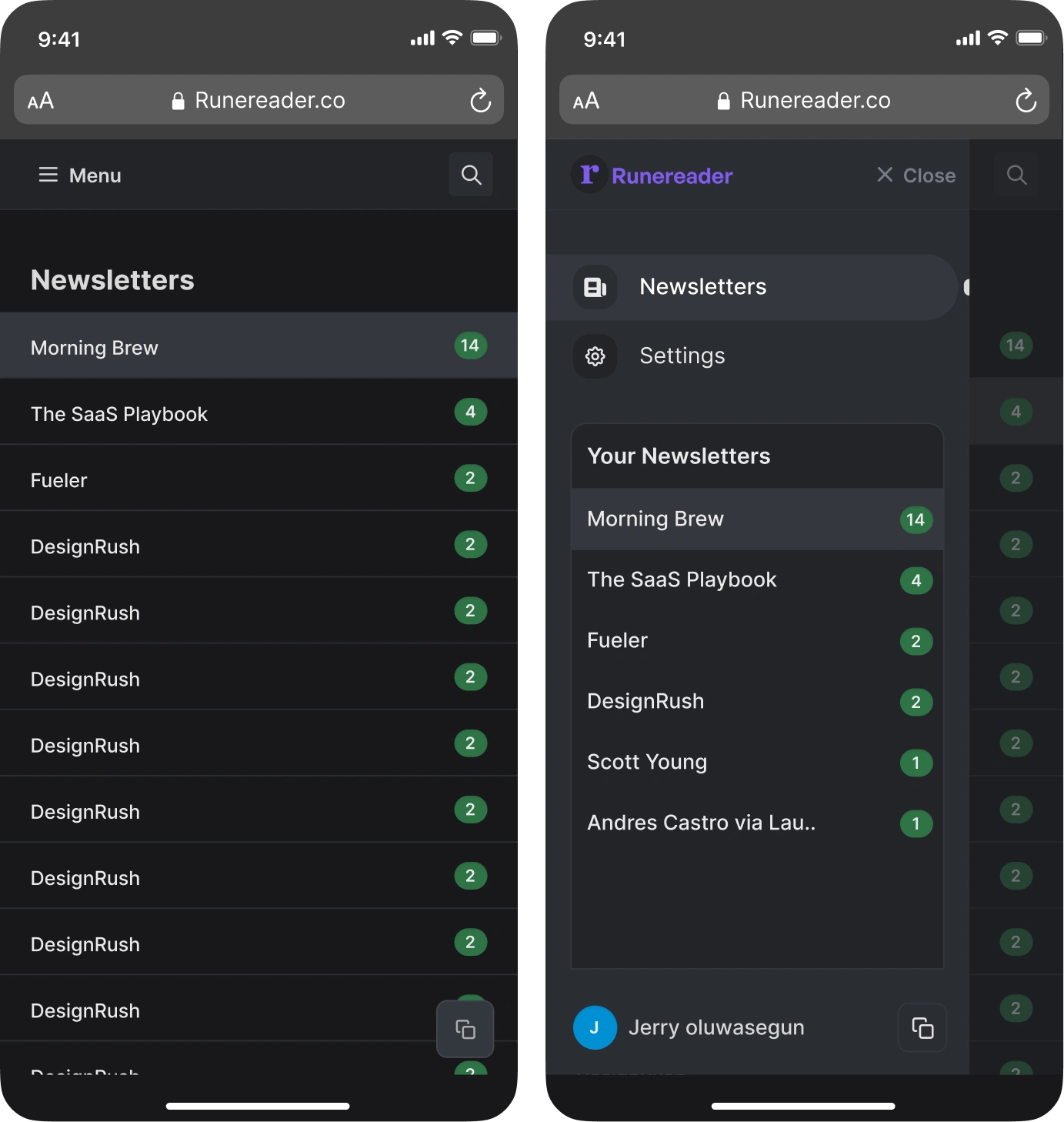
I also focused on making the web app fully responsive, ensuring users could easily access and navigate Rune on their phones, since mobile would be a key part of the reading experience.

Lessons
Building Rune reinforced the importance of accessibility and starting with a strong foundation. While the core experience works, there is still plenty of room to improve the product and scale its impact.
 Drops
Drops